
Composting 101: From scraps to soil
Discover the science behind composting and how to start your own system at home. Whether it's a large, outside bin or a small bucket in the kitchen, this beginner friendly guide offers insightful tips to begin composting in your home.
RESTORATION
What Is Waste?
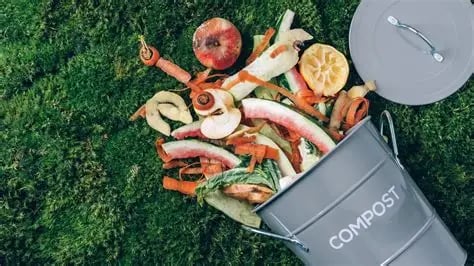
A resource, material, or substance that is no longer being used and is able to be discarded is considered waste. When we think of waste, we generally think that it is at the end of its lifecycle, but that is not the reality for compostable waste.
Often times compostable waste gets mixed in with non-compostable waste or trash. When this happens compostable waste joins trash on its journey to the landfill, but there can be a different pathway for this waste - composting.
When we compost materials like food scraps, cardboards, toilet paper rolls, over time, this matter decomposes into nutrient-dense soil.
Nature as a Mentor
Nature is quite the teacher when it comes to composting. Take a step outside or think about the last time you were outside, are there any leaves on the ground? I bet that there are leaves, fallen sticks, and possibly some mushrooms that are around, even simple organic matter like these feed decomposers such as insects, microbes, and fungi.
What Makes Decomposition Work?
Decomposers break down organic matter from complex compounds to simple compounds. Simple compounds include water, carbon dioxide, and ammonium which are released back into the soil and give it nutrients like prosperous, nitrogen, and potassium. It is important to have a equal blend of materials entering your composting system in order to create the perfect ratio of carbon, water, nitrogen, and oxygen.
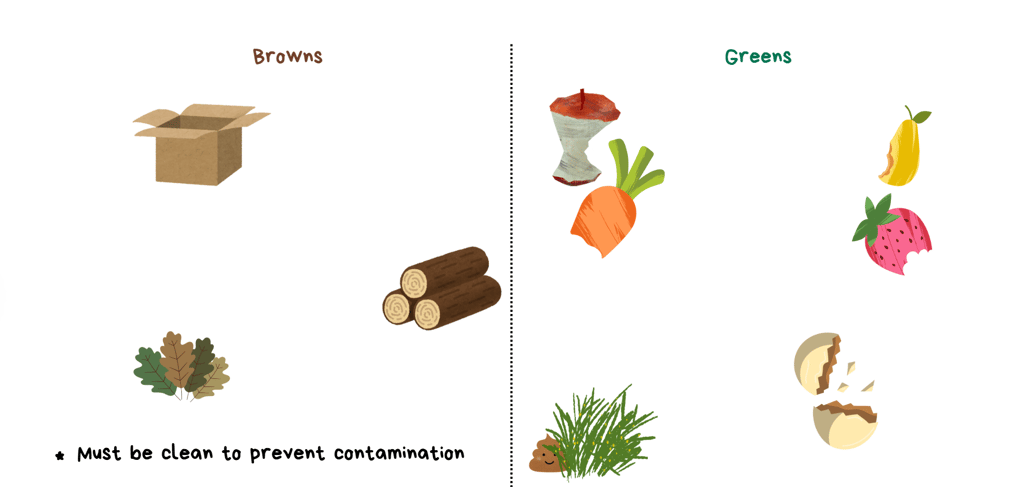
The scientific ideal ratio for composting is 30:1. Think of carbon as brown and nitrogen as green, so 30 parts of brown for every one-part green. For home composting, a simple ratio is 2:1 (two parts brown to one part green) Here are some ideas of what to use for each:
The goal of this ratio and composting is to allow the soil it take in new nutrients from the decomposed matter. Nutrient-dense soil supports and strengthens the growth of plants. Plants feed animals, provide oxygen, and contribute to many cycles here on Earth. Contributing to their growth through composting is a just one more way we participate in nature's journey of restoration, but what stops us from doing it?
Barriers to Composting & What you can do
One big challenge to composting could be that it is 'too complicated', but it can be as easy as you make it. An easy way to compost is the way that works for you and suits your needs. Reflecting on what you consume and what you discard of is a great first step in seeing the reality of what your compost would look like. From there, develop a composting system that meets your needs and your consumption rate.
Getting started is the best thing to do and if you run into concerns, you can explore more from there. Composting is not an overnight process or practice - it can take weeks or even months and often results happen underground, that's why commitment can pose as another common barrier. Commitment is why it is important to find a system that suits your needs - if the system is too complex or if it's outside when you are usually inside, commitment may fade.
What Can I do Today?
So, think about it for just a minute, "What scraps do I produce". Reflect on what produce says about you and your habits. Would composting shift these habits and others related to food and waste?
If you want to start composting to put a change of habits into play, think of some small steps you can take. For example, placing a bin for outside for designed 'browns' or a bowl on the counter for 'greens'. As a I mentioned earlier, you can reflect on what you consume, produce, and discard of; try sorting these in your head, on paper, or in the designated bins (if you are that far). If composting is totally out of your ability, sorting into the green bins properly or taking compostable items to local (accepting) compost facilities is a meaningful impact.
Nature's Recycling
Understanding the Science Behind Decomposition
Discover the science behind composting and the impacts composting has on the environment. From reducing waste in landfills and creating a sustainable resource, this video covers the basics of composting for curious minds.

Beginning a Compost System at Home
Step 1: Choose your method
When choosing your method, it is important to reflect on how much you consume and how much compostable waste you produce. Additionally, think about whether an outdoor or indoor system would best fit your needs; keeping accessibility in mind may increase composting success. Indoor composting is great for smaller volumes of compostable waste or storing compostable waste while outside composting is more suited towards larger volumes and complete decomposition.
Outdoor methods
Bin: The bin method of composting uses a large container where the compostable material is placed directly inside in alternating layers of green and brown. The contents must be regularly flipped or rotated. This method is a simple and effective method that is suitable for homeowners who have a moderate amount of space. Bin composting does not attract pests and is low maintenance, which could be suitable for homeowners looking for a simple and cost-effective composting system; however, this method is takes longer to decompose compared to tumbler bins.
Tumbler bin: The tumbler bin is a faster alternative to composting than the bin through the use process of mixing organic material. The rotating design of the bin allows for the introduction of oxygen which speeds up the aeration process of organic material, ultimately accelerating the process of decomposition. This method is favored by those who desire an effective composting method that achieves faster results.
Making a designated pile: Creating a pile of compostable material directly on the ground is the most cost-effective composting system; however, it easily attracts pests and can become smelly or messy if not maintained overtime. This method works by occasionally flipping or rotating the material in the pile and letting nature run its course. Decomposer like worms, microbes, and fungi help break down the material overtime.
Indoor methods
Vermicomposting: Vermicomposting is a type of composting that includes the use of worms as the primary decomposers. When maintained correctly, this method should be odor-free. This method requires attentive care as it requires maintaining a habitat for the worms (knowing what to avoid composting and maintaining suitable living conditions). This method requires maintaining a healthy ecosystem for the worms while simultaneously achieving the ideal ratio of browns to greens. Vermicomposting requires additional steps and care which can be found by clicking here.
Bokashi Composting and Bins/Buckets (Passive Indoor Collection): Bokashi composting and passive indoor bins or buckets are not true composting methods and require further processing; however, they are great for holding or storing compostable material until further use. Bokashi composting methods require burying the fermented waste while the bin or bucket method requires individuals to transfer material either to a facility or to an outdoor composting system.
Step 2: Know What to Compost
As mentioned previously, the scientific ideal ratio is 30:1 (carbon:nitrogen). However, the basic rule of thumb for at-home composting is 2:1. For every 2 parts brown or carbon add one part green or nitrogen. The 2:1 ratio is suitable for beginners and those who are composting at home.
Common browns include the following: Cardboard, dry leaves, straw, unbleached paper towels and toilet paper, pine needles, paper egg cartons, sawdust from untreated wood, and woodchips.
Common greens include the following: Grass clippings, fruits and vegetables, coffee grounds, fresh garden trimmings, paper tea bags, and animal manure.
Step 3: Maintaining Your Compost
Turning: Regularly mixing your compost introduces oxygen and maintains healthy decomposition. By regularly turning or rotating the organic material, airflow increases which prevents odor and supports the activity of microbes (which help decompose material)
Airflow: Oxygen is essential for microbes to function properly. With poor airflow, the compost may begin to stink, and the process of decomposition takes longer. To avoid this, regularly turn the material, add bulky material, and monitor the moisture levels in the compost.
Heat: Compost piles require an internal temperature of 130-160°F. Small piles tend to release heat faster than larger piles, emphasizing the important of the size of the compost - larger compost piles or bins will retain a greater amount of heat which accelerates the breakdown of organic material.
Moisture: A compost pile should never dry or soggy. In instances where a compost is too dry, it will decompose at a slower rate. To avoid dryness, add a light amount of water; however, too much water or wetness and there will be a foul stench, and conditions will not be suitable for decomposition. Adding dry brown to the pile could help when it is too wet.
Balance: Remember the ratio for composting, 2:1. Aiming for and maintaining this ratio is important for creating the conditions for composting to occur.
Step 4: Observe and Maintain
Depending on your method, composting can take several weeks, months or even up to years to yield a finished product. The finished product is created through successful, healthy decomposition. Watching for smells, establish proper heat, air flow, moisture levels, and balance of materials are ways to ensure healthy decomposition.
Step 5: Using the Final Product
Composting adds organic matter to the soil; this improves the structure and moisture retention making it a great soil for preventing runoff and soil erosion. Additionally, the nutrient-rich soil improves the health and growth rate of plants while reducing the need for fertilizers making it a great product to use in gardens, raised garden beds, landscaping and in potted plants.
The United States Environmental Protection Agency (U.S. EPA) claims that "Markets and applications for compost include agriculture, horticulture, landscaping, gardening, topsoil and sod production, roadside and construction projects, wetlands protection and creation, soil remediation, land revitalization, sports fields and golf courses, ecosystem restoration, sediment and erosion control, and green infrastructure."
Benefits of Composting
The most common material found in landfills is food. The US EPA goes on to state that "in 2019, 66.2 million tons of wasted food were generated in the food retail, food service and residential sectors in the United States. Only 5% of that wasted food was composted." They also suggest that in 2022, close to 60% of landfill methane emissions were produced from the breakdown of organic materials and landfilled food waste. Composting can directly reduce the amount of food waste sent to the landfill - a result of this would be less greenhouse gas emissions.
The most obvious benefit of compost is that it produces nutrient-rich soil compacted with organic matter. This enriched soil supports healthy plant growth and even improves the structure of surrounding soil - compost-amended areas can overtime enhance adjacent soil. "Compost also improves the biological, chemical and structural health of soils. This helps both the plants that grow in that soil, as well as supporting the surrounding ecosystem of worms, bugs, microbes, and others." (US Composting Council)
United States Environmental Protection Agency. Composting. EPA, 26 Sept. 2023, https://www.epa.gov/sustainable-management-food/composting.
US Composting Council. Soil Health Benefits. US Composting Council, https://www.compostingcouncil.org/page/SoilHealthBenefits. Accessed 4 Nov. 2025.
Work Cited:
Mission
To reconnect with nature, and—with curiosity and love—live closer to a more sustainable and connected world.
Connect
© 2025. All rights reserved.